Shipping fragile and high-value goods requires more than just a cardboard box. Whether you’re transporting electronics, glassware, pharmaceuticals, machinery parts, or luxury items, proper packaging is critical to prevent damage, reduce financial risk, and ensure safe delivery.
In modern logistics, packaging is not just protection — it’s risk management.
Why Proper Packaging Matters
Poor packaging can lead to:
- Breakage and product loss
- Insurance claim complications
- Delivery delays
- Customer dissatisfaction
- Financial and reputational damage
Professional logistics providers like City Care Freight and Logistics Pvt. Ltd. implement standardized packing protocols to safeguard delicate consignments across rail, road, and air transport.
1. Choose the Right Outer Packaging
The first layer of protection starts with the outer box or crate.
Best Practices
- Use corrugated double-wall or triple-wall boxes for fragile goods
- For heavy or high-value cargo, opt for wooden crates
- Ensure boxes are new and moisture-resistant
- Avoid reusing weak or damaged cartons
Tip: The box strength should match the product weight and transit mode.
2. Use High-Quality Cushioning Materials
Cushioning absorbs shock and vibration during handling and transport.
Recommended Materials
- Bubble wrap
- Foam sheets
- Thermocol (EPS) blocks
- Air pillows
- Packing peanuts
Wrap each item individually and ensure no empty space remains inside the box.
3. Follow the Double-Boxing Method
For extremely fragile or expensive items:
- Wrap the product securely
- Place it inside a smaller inner box
- Cushion all sides
- Place that box into a larger outer box with additional padding
This method provides dual impact protection.
4. Secure Sealing & Reinforcement
Improper sealing can cause cartons to open in transit.
Sealing Guidelines
- Use heavy-duty BOPP or PVC packing tape
- Apply the H-taping method on all box seams
- Reinforce edges for heavy shipments
- Use strapping bands for bulky cargo
5. Labeling & Handling Instructions
Clear labeling reduces mishandling risks.
Essential Labels
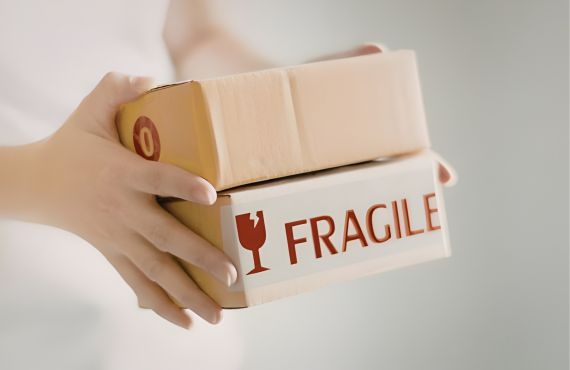
- “FRAGILE”
- “HANDLE WITH CARE”
- “THIS SIDE UP”
- “DO NOT STACK”
Use waterproof labels and place them on multiple sides.
6. Moisture & Weather Protection
Cargo often faces humidity, rain, or temperature changes.
Protection Methods
- Shrink wrapping
- Stretch film wrapping
- Waterproof liners
- Silica gel moisture absorbers
This is especially important for electronics, documents, and pharmaceuticals.
7. Shock & Vibration Protection
Long-distance rail and road transport can cause constant vibration.
Solutions
- Foam corner protectors
- Rubber padding
- Suspension packaging systems
These reduce micro-damage during transit.
8. Palletization for Bulk Fragile Cargo
When shipping multiple fragile boxes:
- Use wooden or plastic pallets
- Stack evenly with cushioning layers
- Shrink wrap the full pallet
- Strap securely
This prevents shifting during loading/unloading.
9. Insurance Coverage for High-Value Goods
Even with best packaging, unforeseen risks exist.
Always Consider
Transit insurance
Declared value coverage
Documentation for claims
Insurance ensures financial protection in case of loss or damage.
10. Professional Packaging Services
For expensive or sensitive shipments, professional packing is recommended.
Services include:
- Custom crating
- Export-grade packaging
- Re-packaging for long transit
- Escort handling for valuables
This is ideal for machinery, medical equipment, and luxury goods.
Common Packaging Mistakes to Avoid
- Using oversized boxes without cushioning
- Mixing fragile items with heavy goods
- Weak tape or poor sealing
- Missing handling labels
- Reusing damaged cartons
Avoiding these mistakes significantly reduces damage risk.
Final Checklist Before Shipping
✔ Item wrapped individually
✔ No empty box space
✔ Strong outer packaging
✔ Proper sealing
✔ Fragile labels applied
✔ Waterproof protection
✔ Insurance (if high value)
Conclusion
Effective packaging is the backbone of safe logistics for fragile and high-value shipments. The right materials, cushioning, sealing, and labeling ensure your cargo reaches its destination without damage.
Investing in professional packaging not only protects goods but also builds trust with customers and logistics partners.